What are carbohydrates?
If we look at all the organic compounds on the surface of the earth, the largest share of them are carbohydrates. That is why carbohydrates are considered the most abundant organic compound in the world.
Who makes so much carbohydrate? The answer is green plants. Plants whose leaves and stems contain the green pigment chlorophyll use the energy of sunlight to build carbohydrates through photosynthesis.
Carbohydrates are found in everyday food
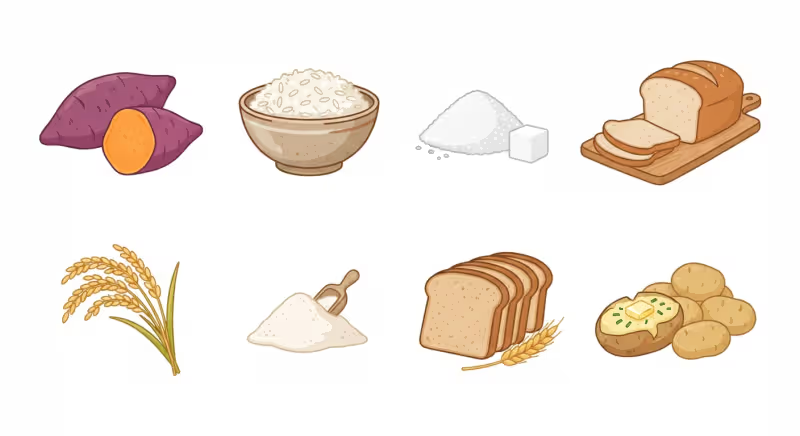
Look at our daily dinner table and you will find plenty of foods rich in carbohydrates. Here are a few of them:
- Yams and sweet potato
- Rice and other grains
- Sugar
- Flour and bread
Chemical composition of carbohydrates
Whichever carbohydrate we look at, it is built from just three elements joined together: carbon (C), hydrogen (H) and oxygen (O).
The general molecular formula of carbohydrates
In a carbohydrate molecule there are exactly twice as many hydrogen atoms as oxygen atoms — that is, the ratio is 2 : 1. A water molecule (H2O) has this same ratio. So the name means "carbon bound with water": it is made by joining "carbo", meaning carbon, and "hydro", from the Greek word for water.
Cx(H2O)y
The general molecular formula shared by all carbohydrates