Organic and inorganic compounds
All the chemical compounds that make up living matter can be split into two groups with a single question: "Does this compound contain carbon?"
If the answer is "yes" — that is, if the molecule contains carbon — it is an organic compound. If the answer is "no" — that is, if the molecule contains no carbon — it is an inorganic compound.
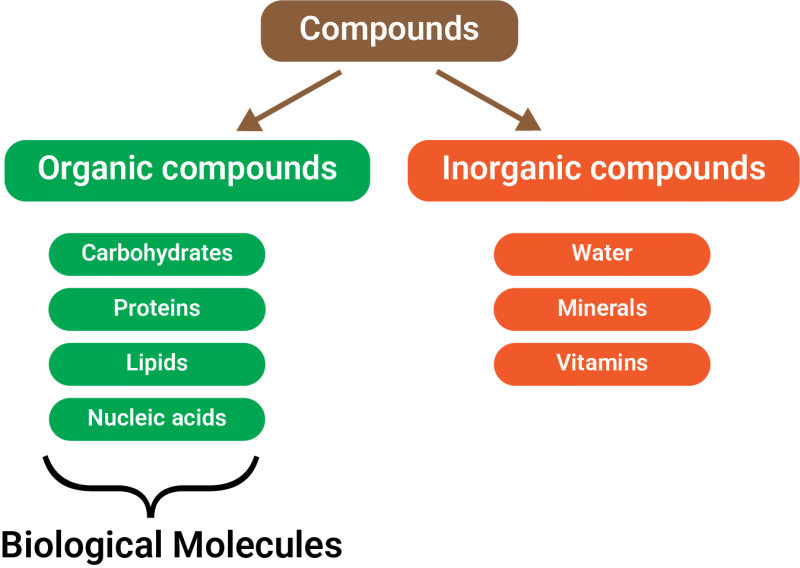
Seeing the name "inorganic", it would be wrong to think these compounds do not matter much to life. No cell can survive without water, mineral salts and gases. For example, about two thirds (2/3) of the body weight of most living things is water, an inorganic compound.
Remember
The basic rule for deciding whether a compound is organic or inorganic is whether or not the molecule contains carbon. But the rule has a few exceptions. The following compounds contain carbon, yet they are classed as inorganic:
- Carbon dioxide (CO2)
- Carbon monoxide (CO)
- Carbonate (-CO3)
- Bicarbonate (-HCO3)