Disaccharides
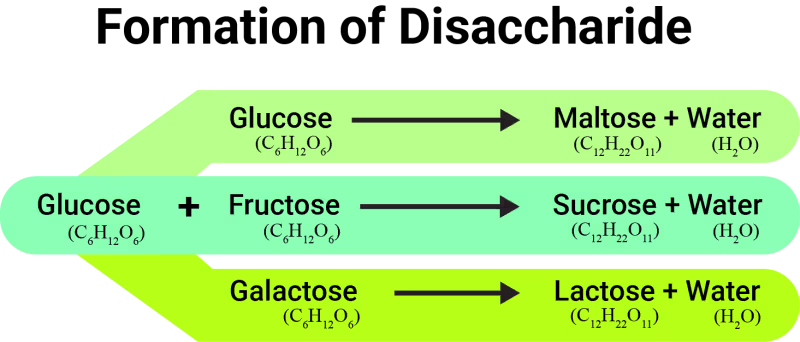
The sugar you put in your tea, sucrose, is a disaccharide. "Di" means two. A disaccharide forms when two monosaccharide molecules join together. As they join, a molecule of water is removed.
2C6H12O6 ⇌ C12H22O11 + H2O
The arrow points both ways because this reaction can go in either direction.
The reaction can also run in the opposite direction. Adding a molecule of water to a disaccharide splits it back into two monosaccharides. This is hydrolysis. (In hydrolysis, a water molecule splits into two parts, H+ and OH-, which attach to either side of the place where the molecule breaks. One large molecule then becomes two smaller ones.) This is how the sugar you eat is broken down in your digestive system.
Shared properties of disaccharides
Like monosaccharides, disaccharides:
- exist as crystals.
- dissolve in water.
- taste sweet.
Comparing the three disaccharides
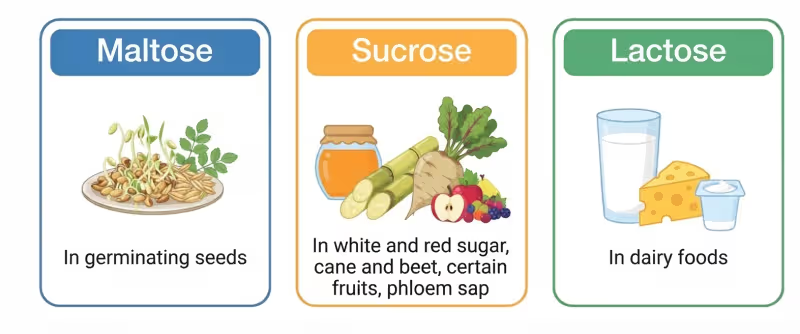
| Type | Where it is found | Facts to know |
|---|---|---|
| Maltose | Seeds that are sprouting (germinating) |
|
| Sucrose | White and brown sugar, sugarcane and beet, some fruits, the sap that moves through the phloem |
|
| Lactose | Milk and milk foods |
|
Spot the pattern
Look closely at the "+" signs in the table above. One part of all three disaccharides is glucose. Only the second part changes — it can be glucose, fructose or galactose.